The short version
Around Twin Falls, ID, squirrel control means three jobs: remove the squirrel humanely with a one-way door, seal the entry it used, and trim the branches and secure the feeders that gave it a route. Their constant gnawing makes attic wiring a fire risk.
- Around Twin Falls, ID, squirrels are daytime animals that den in attics and wall voids.
- They gnaw constantly — chewed wiring in a Twin Falls, ID attic is a fire risk.
- Removal around Twin Falls, ID is done with a one-way exclusion door, not a trap.
- Across Twin Falls, seal gaps larger than 1.5 inches and trim the branches, or the next squirrel moves in.
For anyone in Twin Falls, ID hearing daytime scratching in the attic, seeing squirrels on the roof, or finding chewed wood. If a squirrel around Twin Falls, ID is acting sick or aggressive, call animal control first.
What to look for
Squirrels don't wander into a Twin Falls, ID attic by accident — they're looking for a warm, dry den, especially in spring and late summer when females raise litters. Around Twin Falls, ID, squirrels are two breeding seasons — late winter into spring and late summer into fall — plus a fall push for winter shelter, and the eastern gray squirrel is the one you'll usually meet. Across Twin Falls, the real problem isn't the squirrel you hear; it's the gap it found and the branch it climbed.
- 1Around Twin Falls, ID, scratching, scurrying, and darting overhead at dawn and dusk — squirrels are daytime animals, unlike raccoons.
- 2In a Twin Falls attic, chewed wood, gnawed wiring, and shredded insulation are classic squirrel signs.
- 3A gap as small as 1.5 inches on a Twin Falls roofline or soffit is all a squirrel needs to get in.
- 4Around Twin Falls, ID, a squirrel running along power lines or leaping from a tree to the roof shows the route it's using.
- 5Nesting material — leaves, twigs, and shredded insulation — piled in a Twin Falls attic or wall.
- 6Across Twin Falls, ID, noise concentrated in the morning and evening, when squirrels are most active.
Why it’s worth acting soon
- Around Twin Falls, ID, squirrels gnaw constantly — their teeth never stop growing — and chewed wiring is a fire risk.
- A squirrel denning in a Twin Falls, ID attic shreds insulation and can damage the structure over time.
- Squirrels around Twin Falls, ID rarely carry rabies, but they can still bite if cornered, and fleas and mites come with them.
- An open entry on a Twin Falls, ID home means the next squirrel moves in after the first is removed.
Treatment options and typical costs
Inspection and entry mapping
$100–$250
A provider finds every gap a squirrel could use on your Twin Falls, ID home — roofline, soffits, vents, and chimneys — and confirms whether one is denning now.
- Time
- 45–90 minutes
- Best for
- Any Twin Falls, ID sighting or daytime noise.
Removal with a one-way door
$250–$500
The humane standard on a Twin Falls job — a one-way exclusion door lets the squirrel leave but not return, then the entry is sealed. In Twin Falls's cold months squirrels push into insulated spaces, so the door goes in after the March–June or August–September litters leave. Done right, it handles a litter too.
- Time
- 1–3 days
- Best for
- A squirrel denning in a Twin Falls, ID attic or wall now.
Exclusion and repair
$300–$1,000+
Sealing every gap larger than 1.5 inches on a Twin Falls, ID home and repairing the gnawed wood, so the next squirrel can't follow.
- Time
- Half day to a full day
- Best for
- Repeat visitors or a Twin Falls, ID home with known gaps.
Cleanup and insulation replacement
$300–$1,000+
Removing squirrel nesting material and droppings from a Twin Falls, ID attic, and replacing soiled or shredded insulation.
- Time
- Half day to a day
- Best for
- A Twin Falls, ID attic with nesting or droppings.
Prices are typical published ranges. Ask what’s included before you compare quotes.
 Inside, look for nests, droppings and flattened or soiled insulation.
Squirrels around Twin Falls.
Around Twin Falls, the squirrel you'll meet is usually the eastern gray squirrel — a daytime, tree-climbing animal that dens in attics and wall voids. Across Twin Falls, it's drawn to a warm attic, a bird feeder, and any gap larger than 1.5 inches in the roofline.
When squirrel season runs around Twin Falls.
Around Twin Falls, ID, squirrel activity is two breeding seasons — late winter into spring and late summer into fall — plus a fall push for winter shelter. Across Twin Falls, spring and late summer are when females den to raise litters — which is when you'll hear them in the attic. Twin Falls is with around 54% average humidity and summer highs near 90°F.
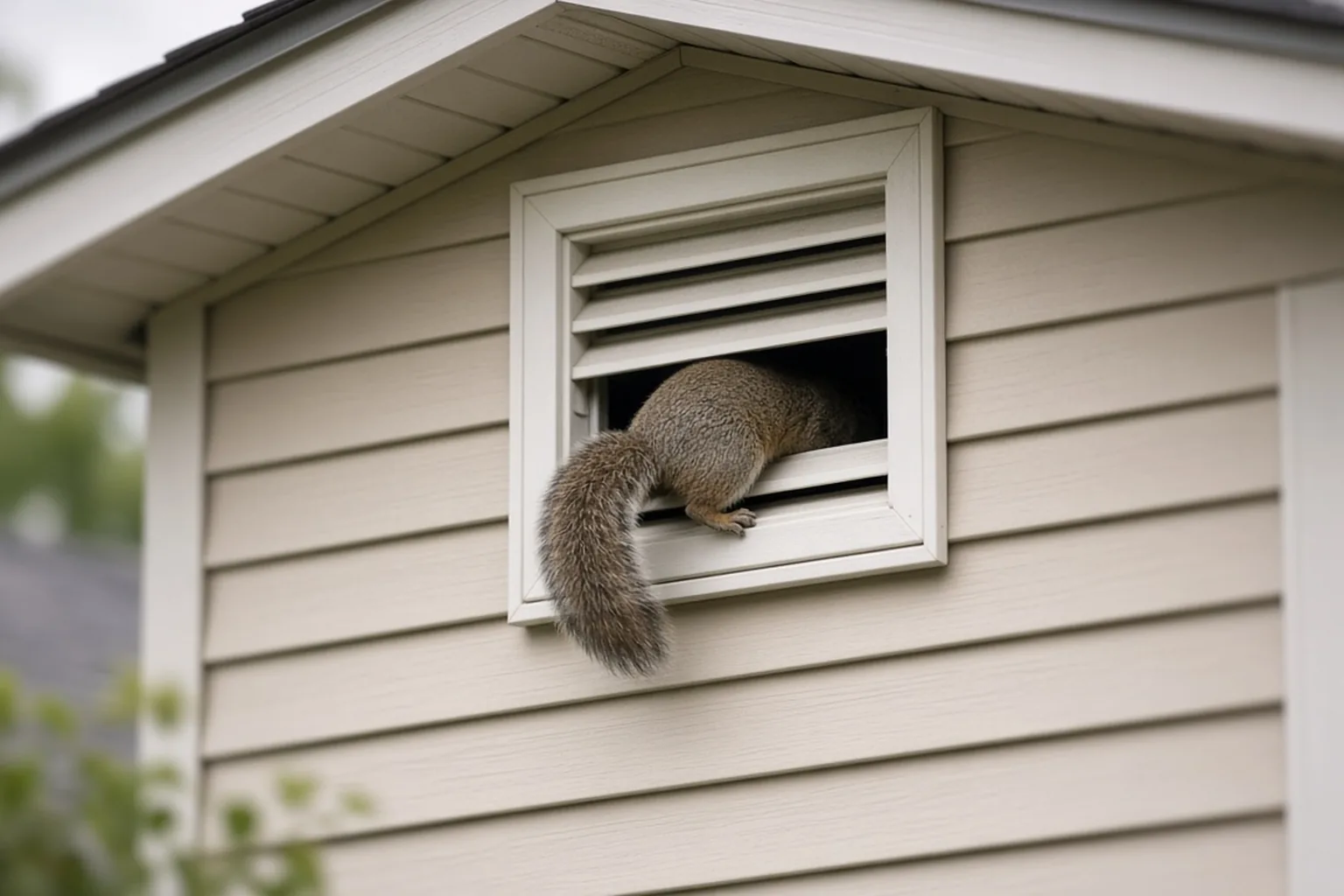 Gable vents without sturdy mesh are easy entry points.
How they get into Twin Falls homes.
Across Twin Falls, squirrels enter through the roofline — gaps in soffits, vents, and eaves, and any opening larger than 1.5 inches. Around Twin Falls, overhanging tree branches and nearby power lines make those entries easy, which is why trimming branches back is part of prevention.
The risks around Twin Falls, ID.
They rarely carry rabies, but a cornered squirrel will bite. Neither the animal nor the gnawing is a DIY problem. Squirrels gnaw constantly — their teeth never stop growing — so attic wiring and insulation around Twin Falls, ID are targets, and chewed wiring is a fire risk.
Getting them out the right way around Twin Falls.
Across Twin Falls, the humane method is a one-way exclusion door: the squirrel leaves on its own and can't return, then the entry is sealed. Around Twin Falls, a provider will also check for a litter — sealing a mother out from her young is inhumane and creates a bigger mess.
The three jobs of squirrel control in Twin Falls.
- Remove the route and food: trim branches and take feeders down in fall, when Twin Falls squirrels start looking for a warm attic.
Across Twin Falls, a quote usually covers only the first job — ask which of the three it covers. - Every squirrel problem around Twin Falls is three jobs in order. - Get the animal out: a one-way door lets it leave humanely. - Close the door: seal every gap larger than 1.5 inches.
Across Twin Falls,
What squirrel control costs in Twin Falls.
Across Twin Falls, published ranges put removal around $250 to $500, with exclusion, repair, and cleanup adding more (Fixr, published ranges). For a Twin Falls home, the four things that move the price are the entry points, whether a litter is present, whether gnawed wiring needs repair, and the cleanup.
What affects the price
- Whether squirrels are denning in a Twin Falls, ID attic versus just passing through the yard.
- The number and location of entry points on a Twin Falls, ID home that need sealing.
- Whether a litter is present in a Twin Falls, ID wall or attic.
- Whether gnawed wiring or insulation needs repair around Twin Falls, ID.
- The amount of cleanup and insulation replacement needed on a Twin Falls, ID property.
- Emergency or same-day calls around Twin Falls, ID usually cost more.
📊
What worries you most about squirrels?
When to call for help
Across Twin Falls, ID, call a professional when a squirrel is denning in the attic or walls, when you hear it in a wall void, or when gnawed wiring points to a fire risk. Squirrel removal in Idaho is usually done with a one-way door, and a licensed provider handles a litter correctly.
What you can do yourself
Around Twin Falls, ID, prevention is safely yours: seal the gaps, trim the branches, and screen the vents. What isn't yours is a squirrel inside the wall — removal with a one-way door needs to be timed so no litter is left behind, and a cornered squirrel in a Twin Falls attic will bite. Leave the removal to a professional.
Squirrels in Twin Falls
Twin Falls is a city founded in 1904, with summer highs near 90°F. Around Twin Falls, ID, squirrel activity is two breeding seasons — late winter into spring and late summer into fall — plus a fall push for winter shelter. Across Twin Falls, squirrels are daytime animals, den in attics and walls, and enter through gaps as small as 1.5 inches — and their constant gnawing makes attic wiring a fire risk.
Local research
Squirrels in Twin Falls, ID: what the public record shows
Before you compare quotes, it helps to know which squirrels actually live in Idaho, when they are busiest around Twin Falls, and what the state figures look like. Everything below links to the agency or university page it came from.
When squirrels are busiest around Twin Falls
Ground squirrels emerge from hibernation in late winter and are above ground into early summer.
Idaho material is strongest on ground squirrels; tree squirrel guidance is thinner.
Rules that apply in Idaho
Sources: Idaho Department of Fish and Game; Penn State Extension. Figures are quoted as the source prints them. How we check our sources
Simple ways to keep squirrels away
- Around Twin Falls, ID, seal every gap larger than 1.5 inches in the roofline, soffits, and vents.
- On a Twin Falls home, cap the chimney and screen vents and soffits with sturdy mesh.
- Across Twin Falls, ID, trim tree branches back at least 6 to 8 feet from the roof.
- Around Twin Falls, keep bird feeders away from the house or switch to squirrel-resistant ones.
- Across Twin Falls, ID, repair loose or damaged roofline trim before squirrels widen it.
- Around Twin Falls, check the roofline each late winter and late summer, before the breeding seasons.
 Seal gaps with metal mesh or flashing. Squirrels chew straight through foam.
Did you know?
Around Twin Falls, ID, a squirrel can rotate its ankles 180 degrees, letting it climb down trees headfirst.
A squirrel in Twin Falls gnaws constantly because its front teeth never stop growing.
Squirrels around Idaho use fake-burying tricks to fool other animals trying to steal their food.
Questions people ask
When are squirrels active around Twin Falls, ID?
Around Twin Falls, ID, squirrels are daytime animals, so you'll hear them at dawn and dusk. Across Twin Falls, activity here is two breeding seasons — late winter into spring and late summer into fall — plus a fall push for winter shelter. In spring and late summer, females den to raise litters — which is when most Twin Falls conflicts start.
Are squirrels dangerous around Twin Falls, ID?
Around Twin Falls, ID, squirrels rarely carry rabies, unlike raccoons — but they can still bite if cornered, and they bring fleas and mites. The bigger risk in a Twin Falls home is the gnawing: their teeth never stop growing, and chewed wiring is a fire hazard.
How do I get a squirrel out of my Twin Falls attic?
The humane method in Idaho is a one-way exclusion door — it lets the squirrel leave but not return — then the entry is sealed. Don't seal the entry while the squirrel is still inside your Twin Falls attic, or you'll trap it.
What does squirrel removal cost in Twin Falls, ID?
For a Twin Falls, ID home, published ranges put removal with a one-way door around $250 to $500 (Fixr), with exclusion, repair, and cleanup adding more. Your final price in Twin Falls depends on the entry points and whether a litter or gnawed wiring is involved.
Can I trap a squirrel myself in Twin Falls, ID?
Around Twin Falls, ID, it's usually legal to deal with a squirrel on your own property, but the one-way-door method needs timing so no litter is left behind. A licensed provider in Idaho has the right door and the experience to do it without trapping or orphaning the young.
Why do squirrels keep coming back to my Twin Falls, ID home?
Because around Twin Falls, ID the entry is still open. If the roof gap on your Twin Falls home stays unsealed, each removal just makes room for the next squirrel. Seal the gap and trim the branches.
Do squirrels chew wires in Twin Falls, ID homes?
Yes — a squirrel's front teeth never stop growing, so it gnaws constantly, and attic wiring is a target around Twin Falls, ID. Gnawed wiring is a fire risk, which is one reason to address a squirrel in your Twin Falls attic quickly.
Nearby cities
Related guides
Sources (5)
The facts in this article come from the public sources listed above. Every home is different, so ask the company you talk to about pricing and what’s included. Published by Squirrel Exterminator · Updated October 13, 2026 · How we write these guides